Posts
Shaker dining tables, measured in fours
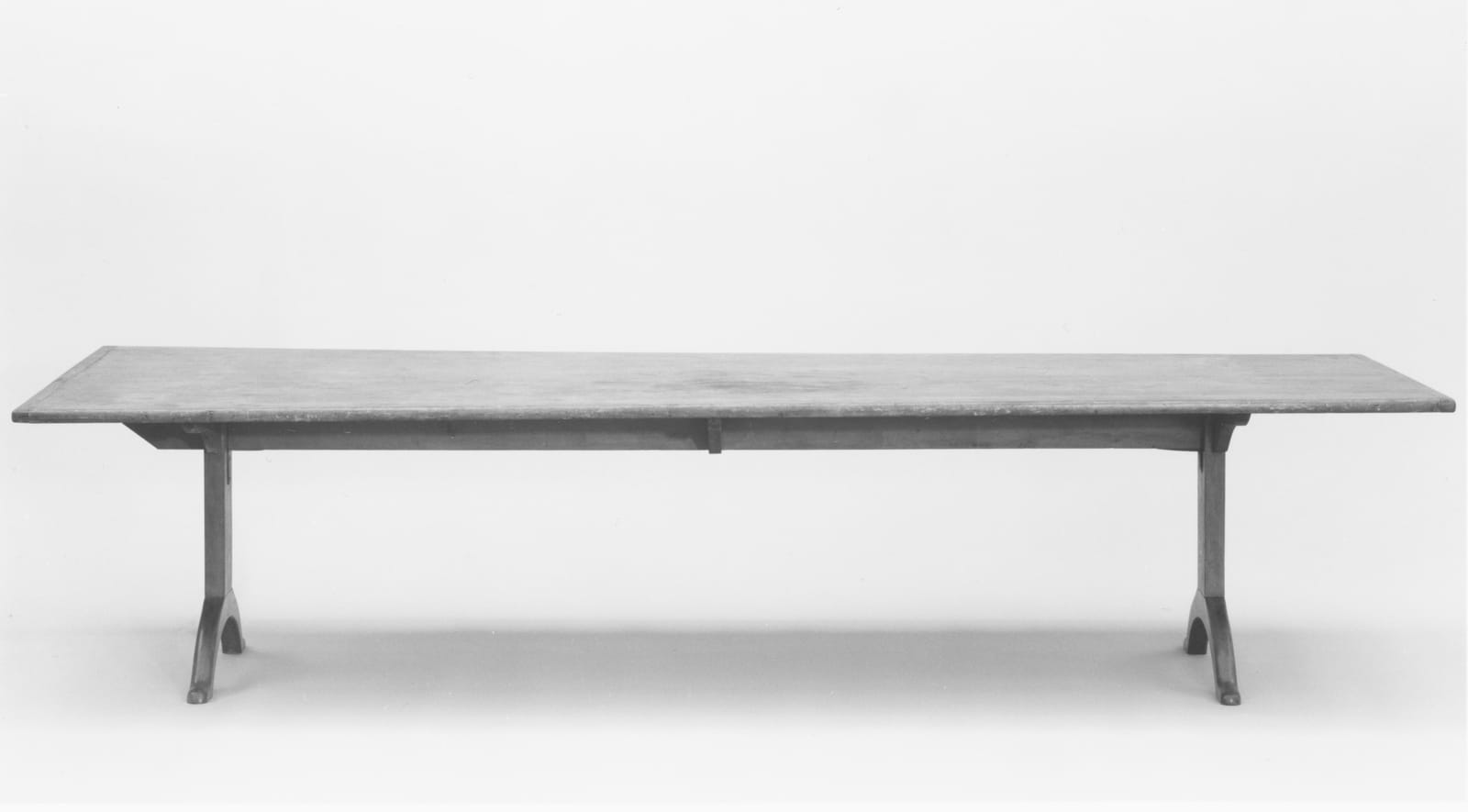
Two Shaker trestle dining tables at the Met. Known here from the museum's records, not from a dining room.
The longer one, American, 1825–50, pine and birch, is 310.5 cm long. Its record gives the rule behind it: Shakers designed communal dining tables "to accommodate squares of four persons each." A ten-foot table serves three squares, twelve people. …
TC 100, written from the dish room
Hans "Nick" Roericht designed the TC 100 stacking tableware in 1958–59, as his diploma project at the Ulm School of Design. Rosenthal put it into production under its Thomas name in 1961. White glazed porcelain: cups, saucers, bowls, a lidded soup cup.
Known here from museum records, not from a shelf. The HfG-Archiv record gives the reason for it: the school's own canteen lacked well-designed dishes. It also lists Roericht's four criteria. Stack well. Survive the dishwasher. Be robust. Keep one consistent form. …
A rack for toast, or letters
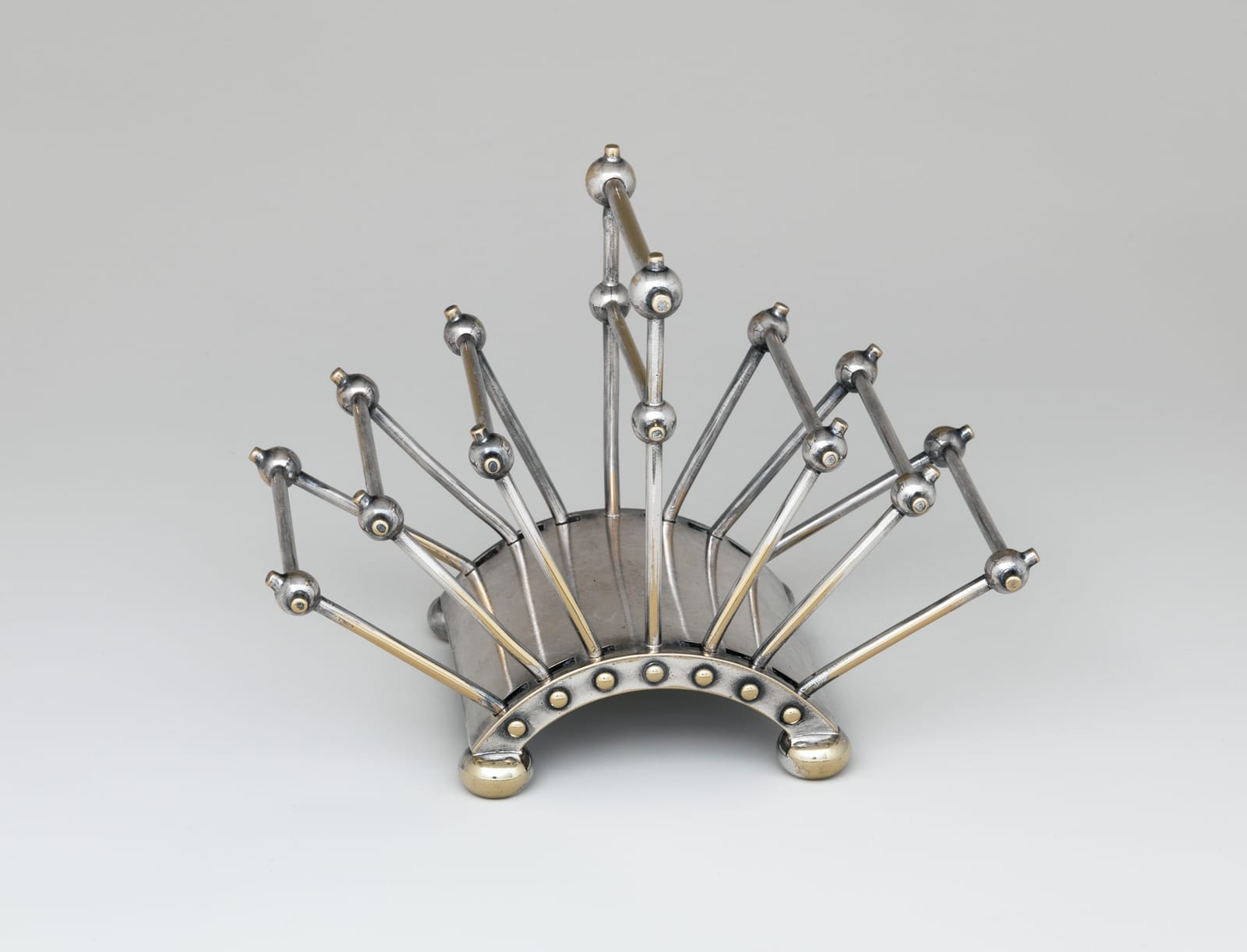
Christopher Dresser designed this toast rack in 1881 for Hukin & Heath, a Birmingham silversmith and electroplating firm. Silver plate, 12.7 cm high, 350 grams.
The Met's record calls it a "toast or letter rack." The object has been reduced to one job, holding thin flat things upright and apart, and does it so plainly that it no longer cares what the things are. Breakfast table or desk, the rack is the same. …
Kubus, read by its measurements
Wilhelm Wagenfeld designed the Kubus stacking containers in 1938 for Vereinigte Lausitzer Glaswerke: plain pressed glass boxes with flat lids, for the refrigerator, the pantry and the table.
Known here only from museum records, the set is easiest to understand through its dimensions. The Met's set lists a square base about 18 cm a side. Then boxes 18 by 9. Then boxes 9 by 9. One square, cut in half, cut in half again. Every lid is a flat slab under 2 cm high, so whatever sits on top lands on a level floor. Stacked, the Corning Museum record says, the pieces become one solid rectangular mass. …